sensation in the brain
By transforming complex studies into engaging visualizations, Sensation in the Brain highlights the impact of neuroaesthetics on health, education, and everyday well-being, offering an interactive and accessible way to experience the science of art
The Opportunity
Neuroaesthetics studies aesthetic experiences at the neurological level, but research needs to be more accessible, memorable, and persuasive
Neurologically, psychologically, chemically, & physiologically, arts and aesthetics affect the human brain and body, and can be used to fundamentally transform day-to-day life. They have proven to have remarkable effects on serious physical and mental health issues.
However, because Neuroaesthetics is an emerging field, its research is confined to academic papers, making it inaccessible to the general public. Additionally, the arts are often undervalued compared to STEM disciplines, limiting recognition of neuroaesthetics' impact on health, education, and cognitive well-being
Target Audience

Middle-Aged & Young Adults
Mid-career adults interested but potentially skeptical of neuroaesthetics research. They require a sophisticated, well-researched interface with relatable information

College & High School Students
Students exploring careers in science, art, or both. They need a visual platform with simplified explanations and interactive elements. Content must clearly connect to the real world
Meeting User Needs
Organization
Modularity encourages users to explore the link between the human brain and artistic experience
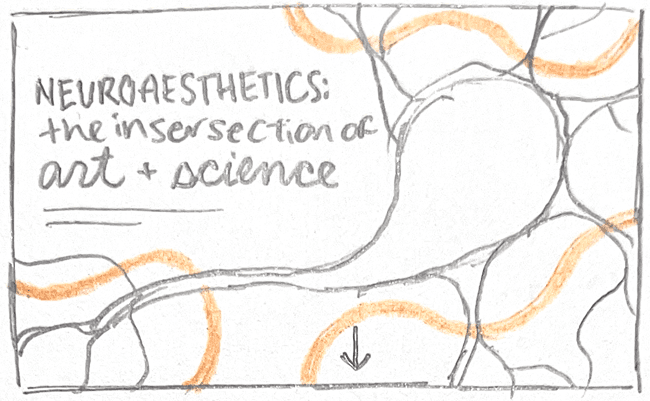
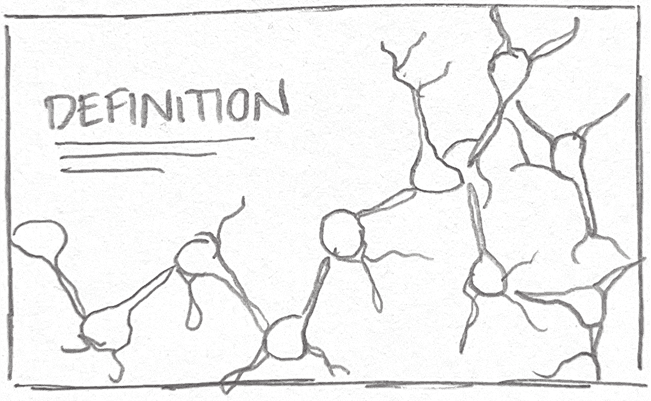
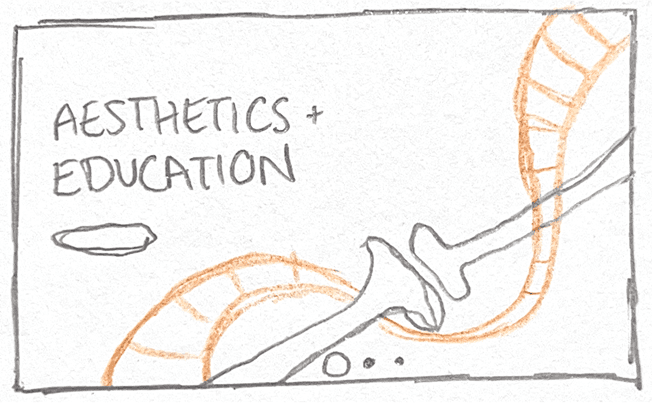
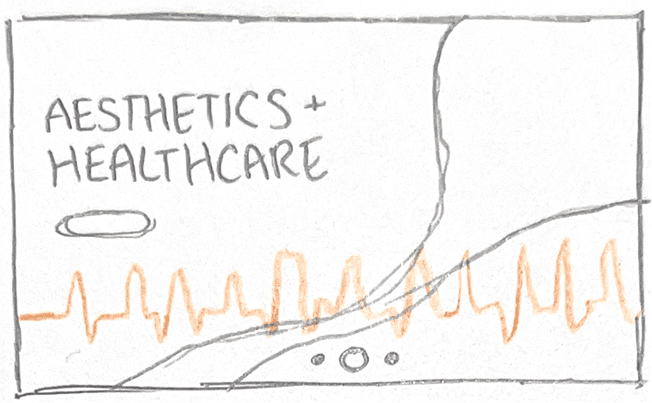
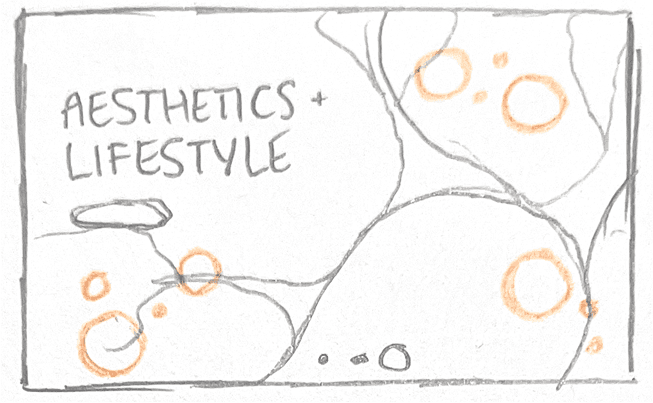
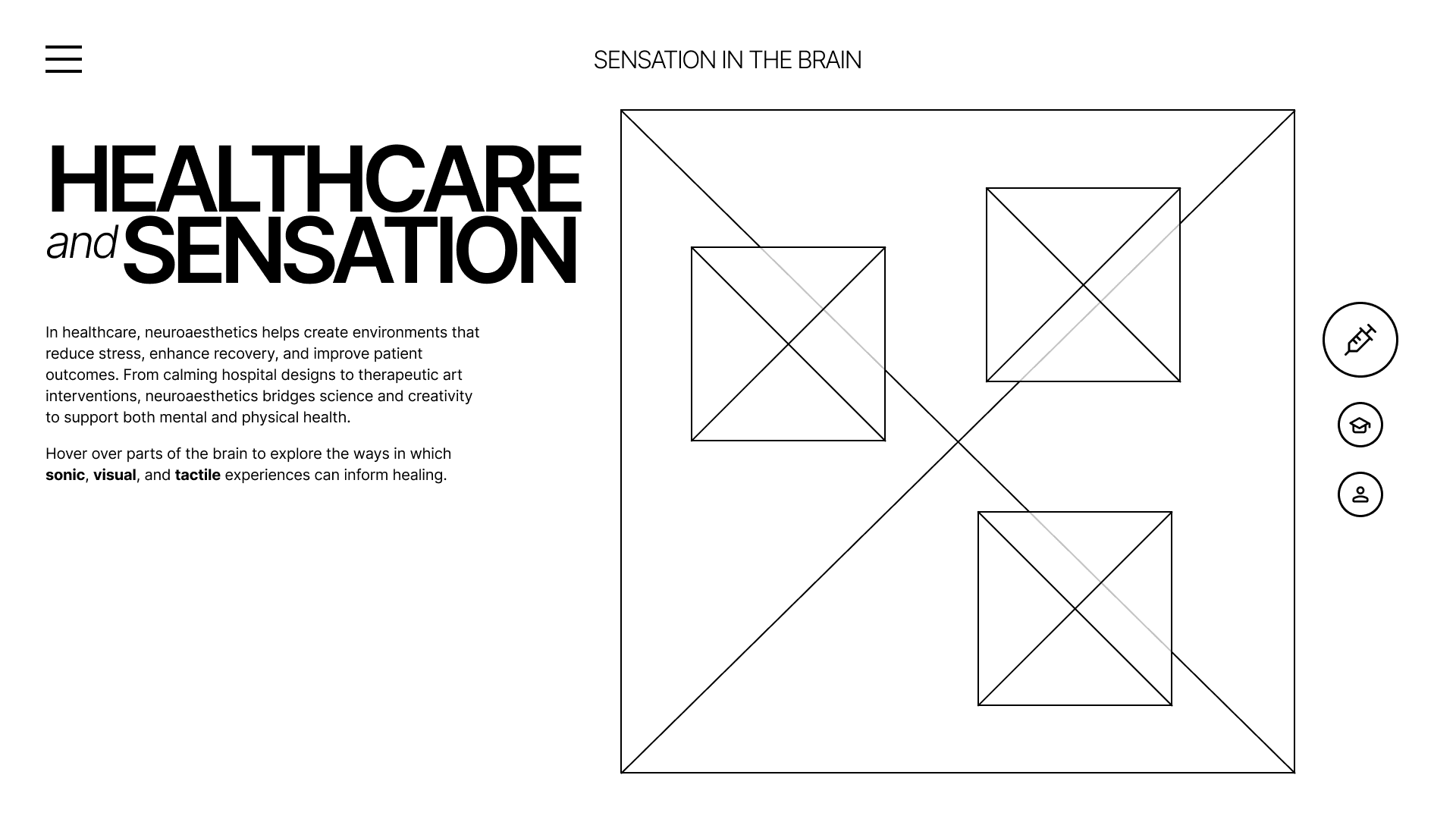
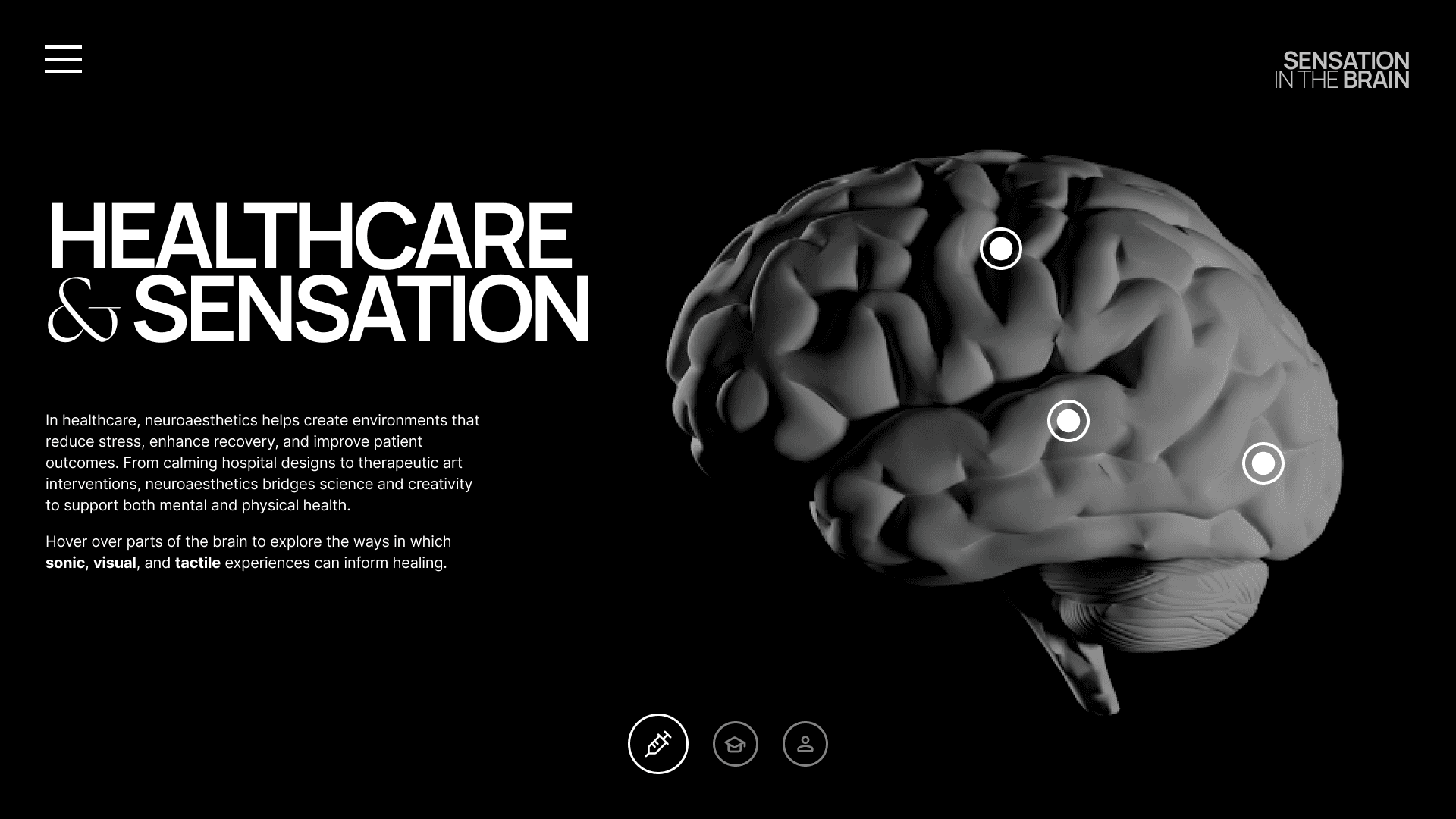
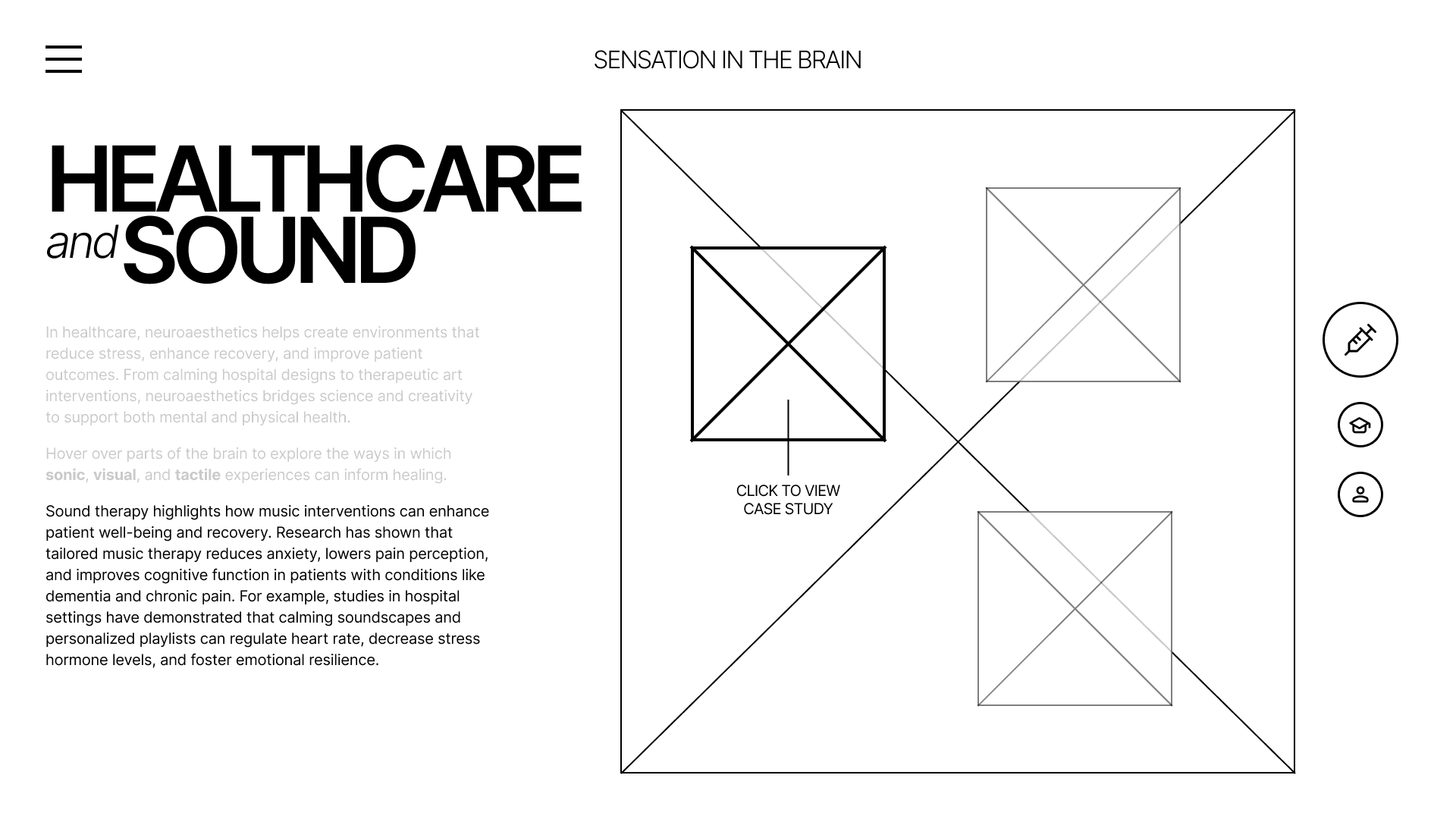
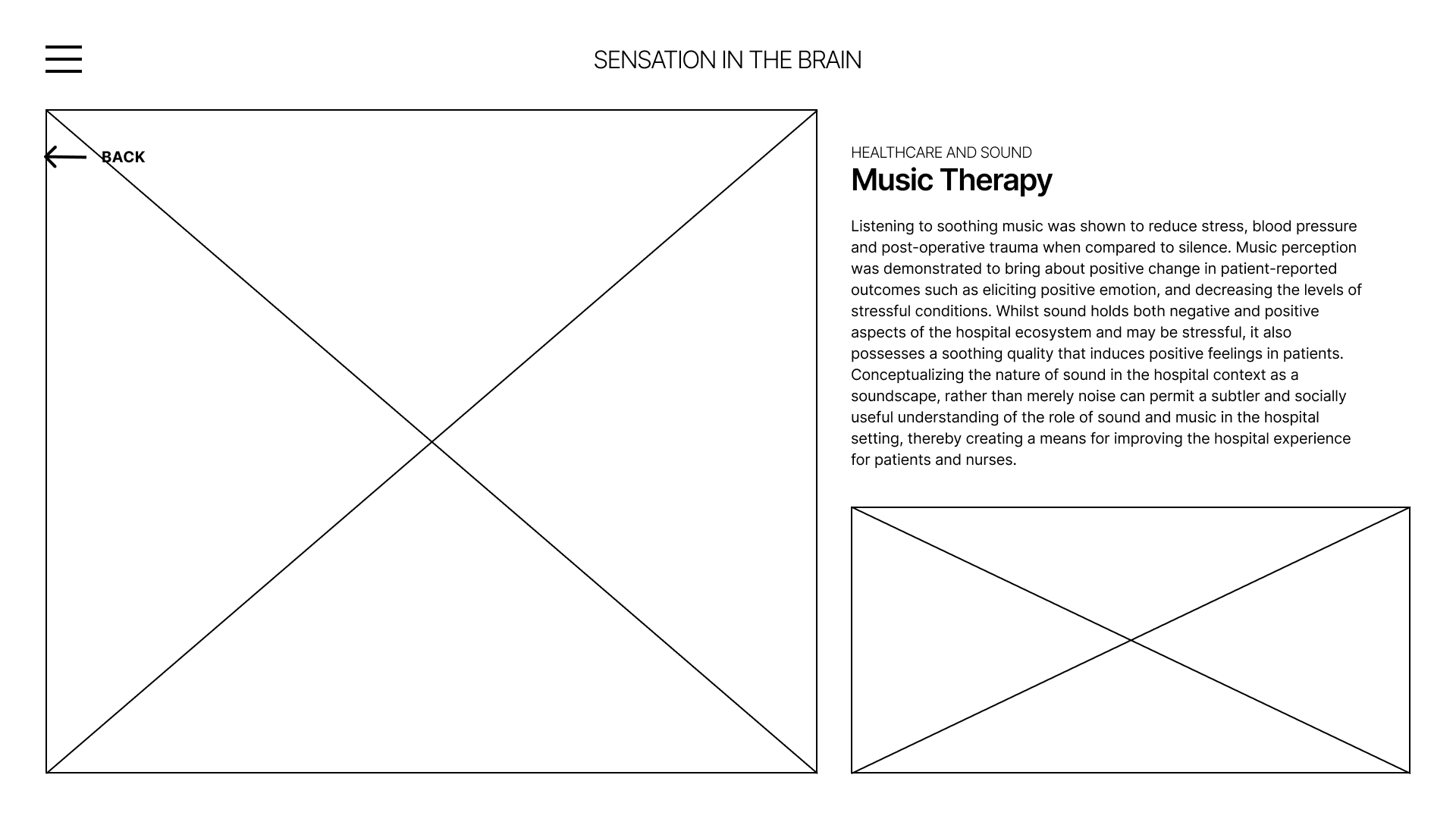
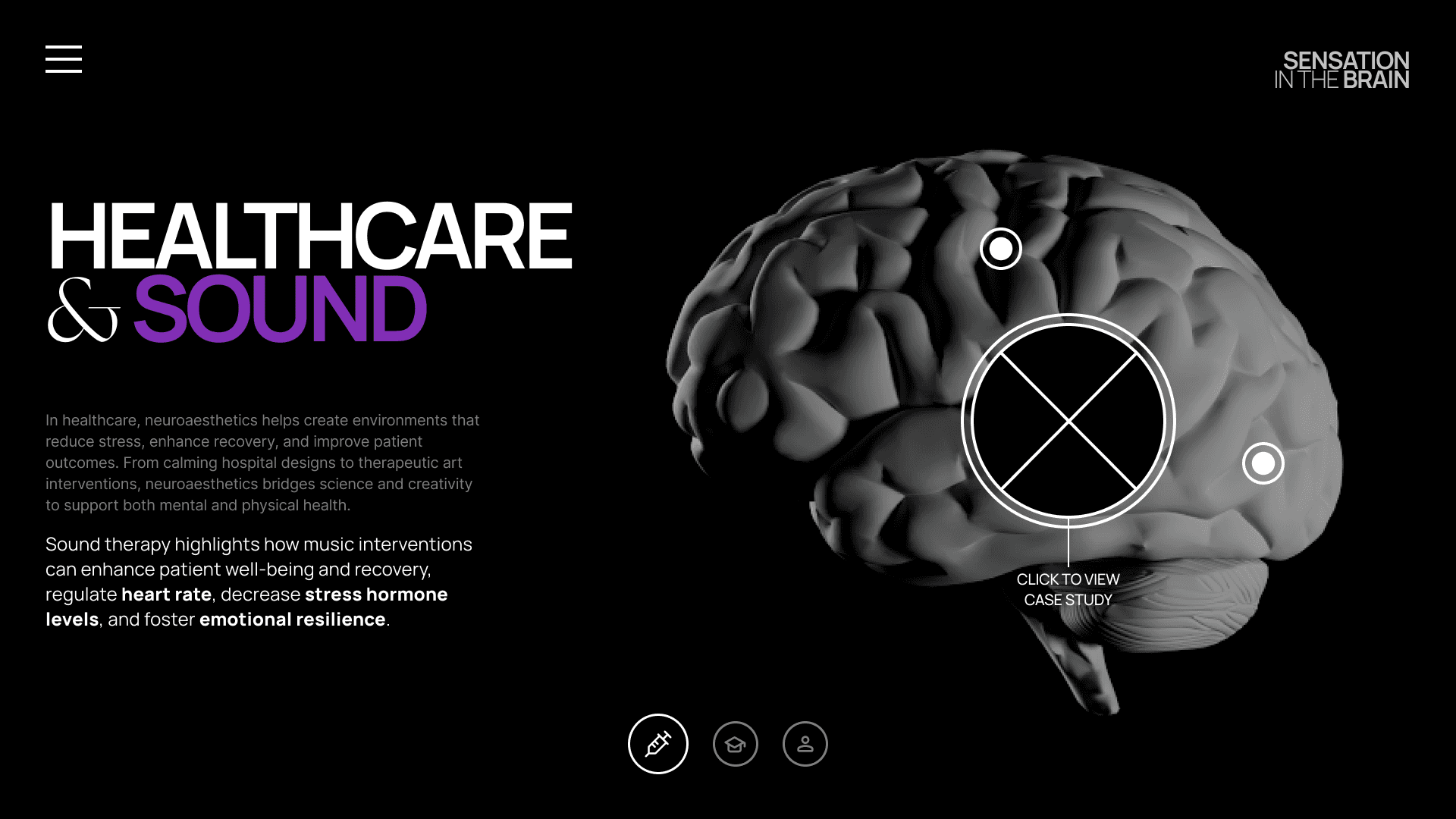
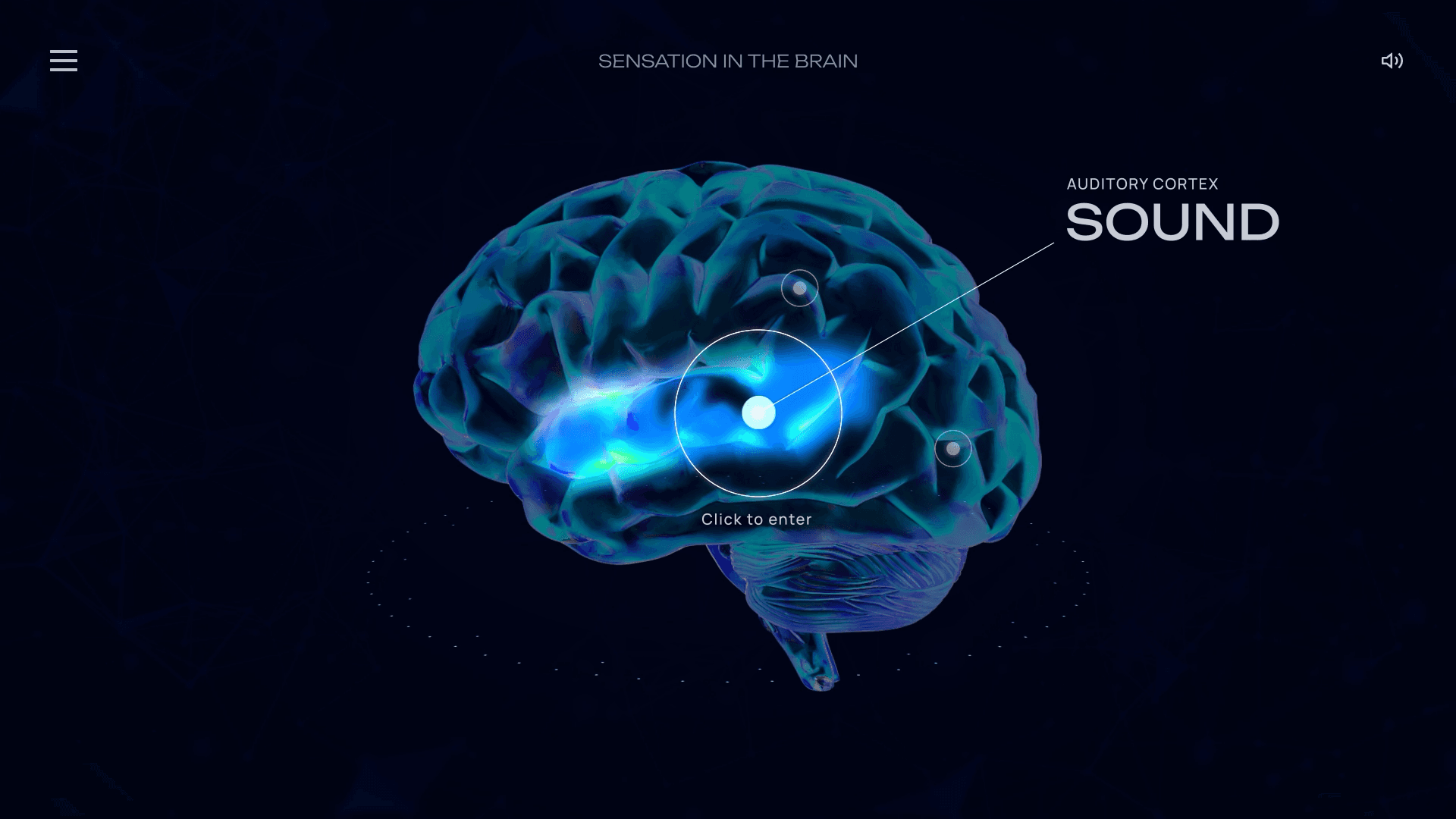
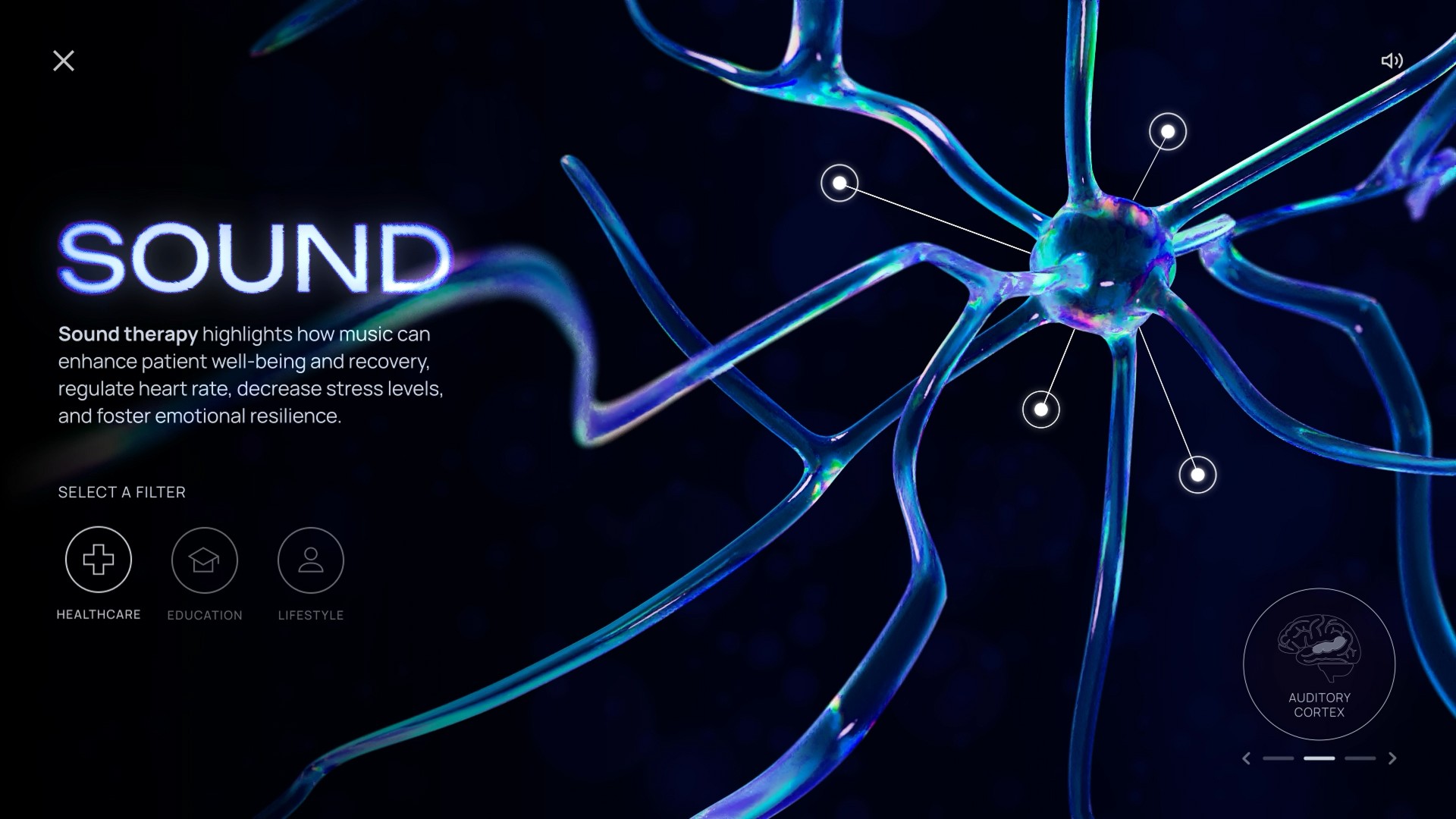
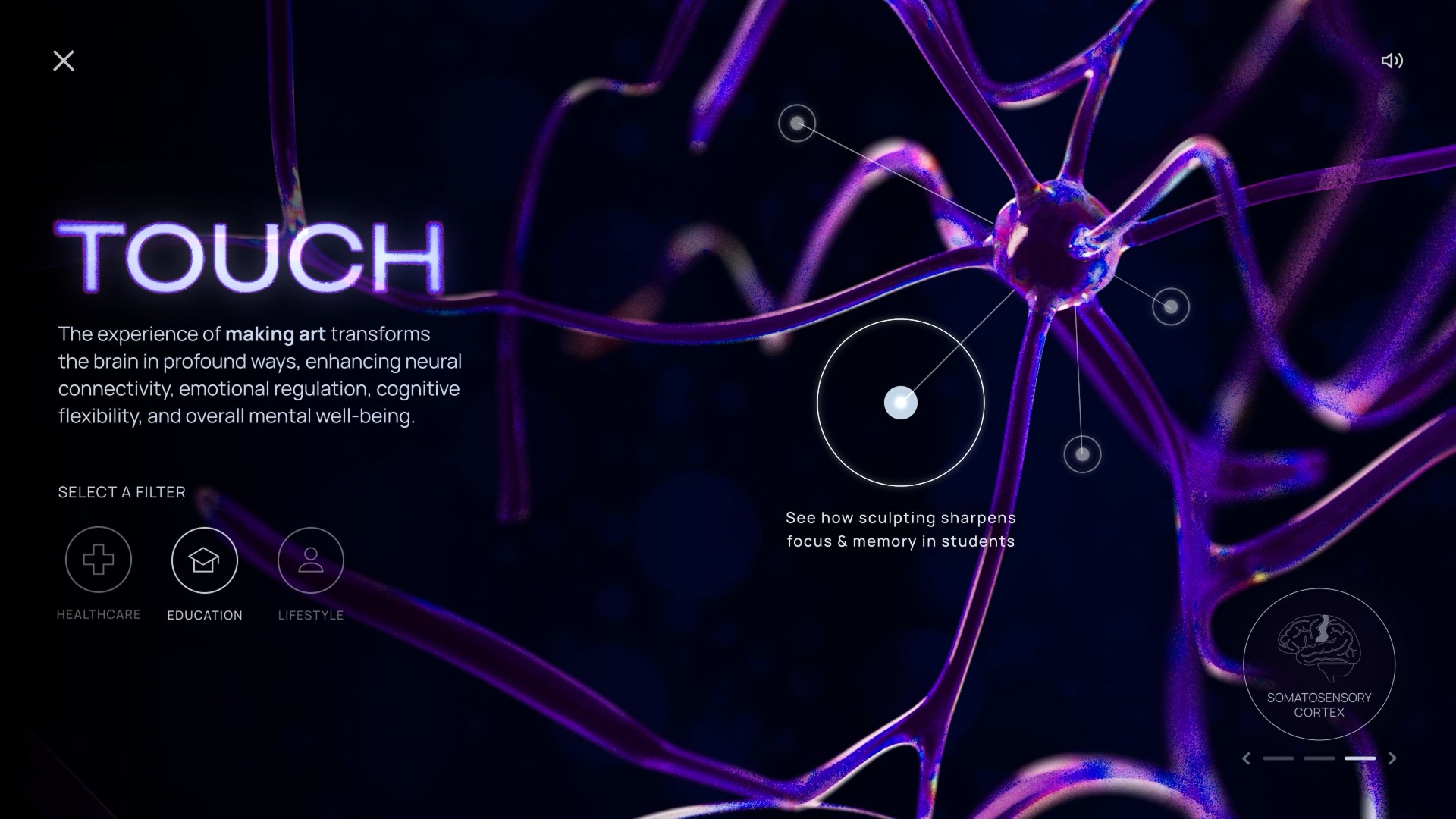
Users explore a 3D brain model, hovering over regions to reveal sensory functions and clicking to dive deeper into content. Research is organized first by sensation (sight, sound, touch) and then by application (healthcare, education, lifestyle). A modular structure guides users from broad concepts to specific case studies, making complex data easy to navigate and connect across contexts
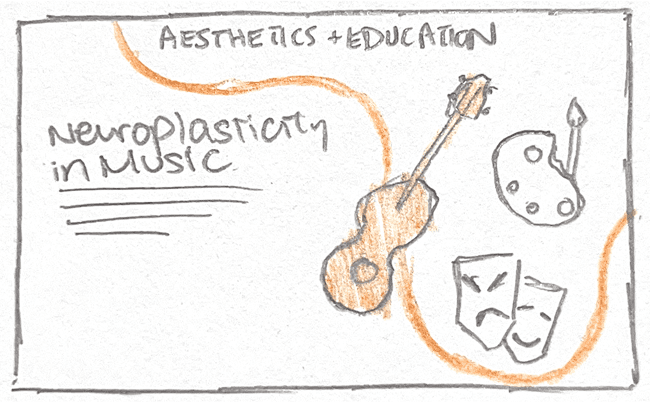
Sketches
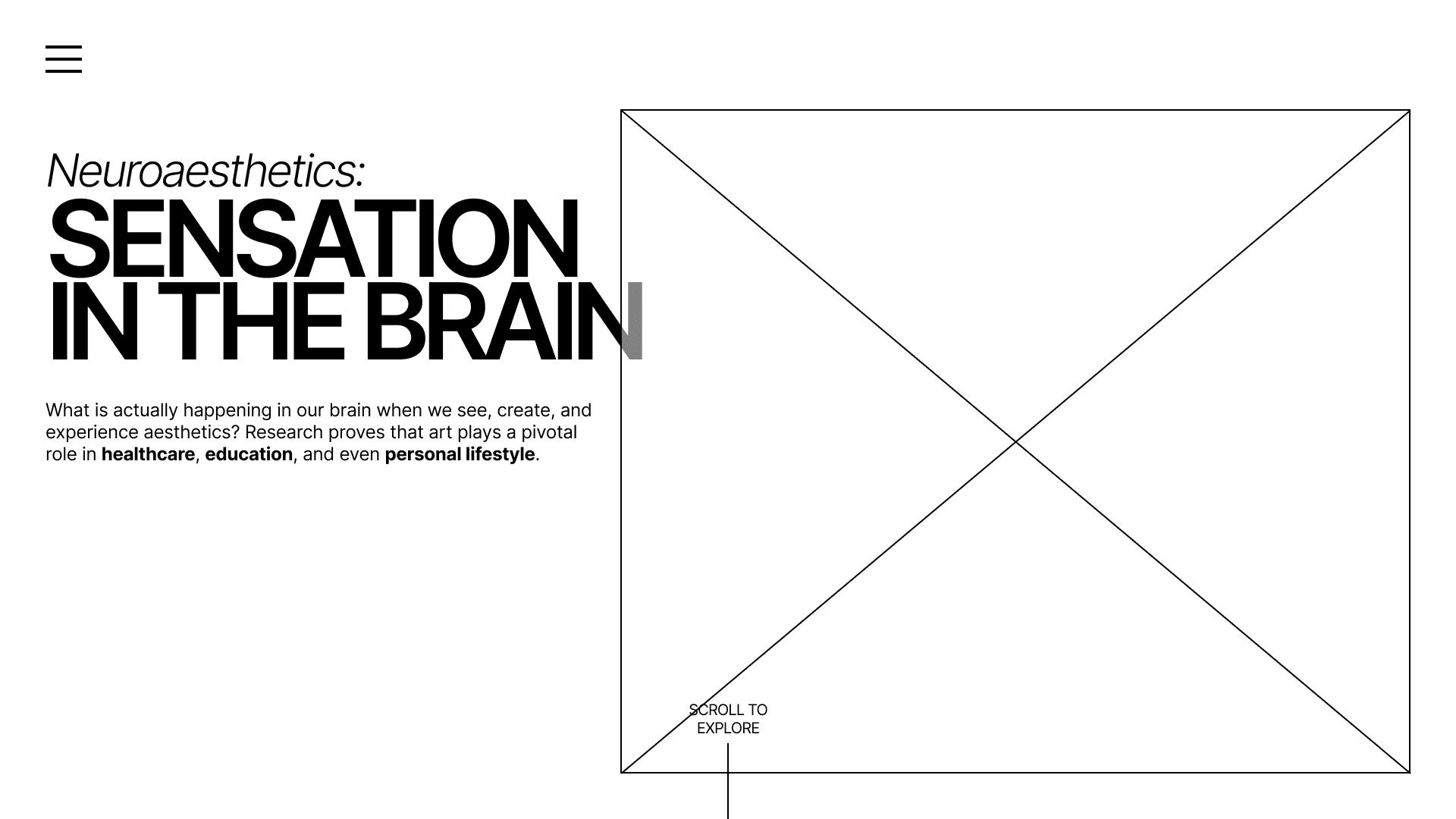
Wireframes
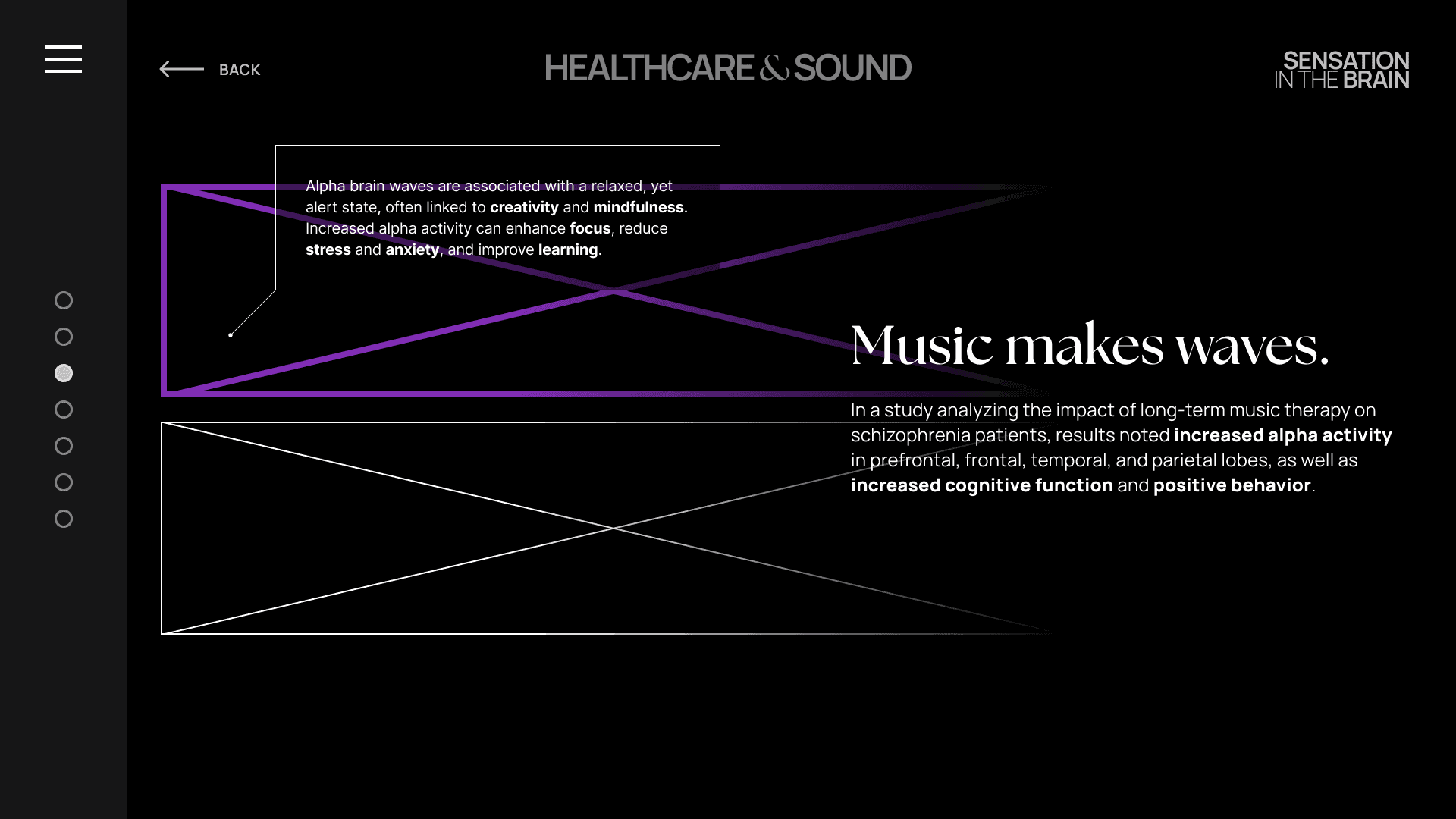
Visual Exploration
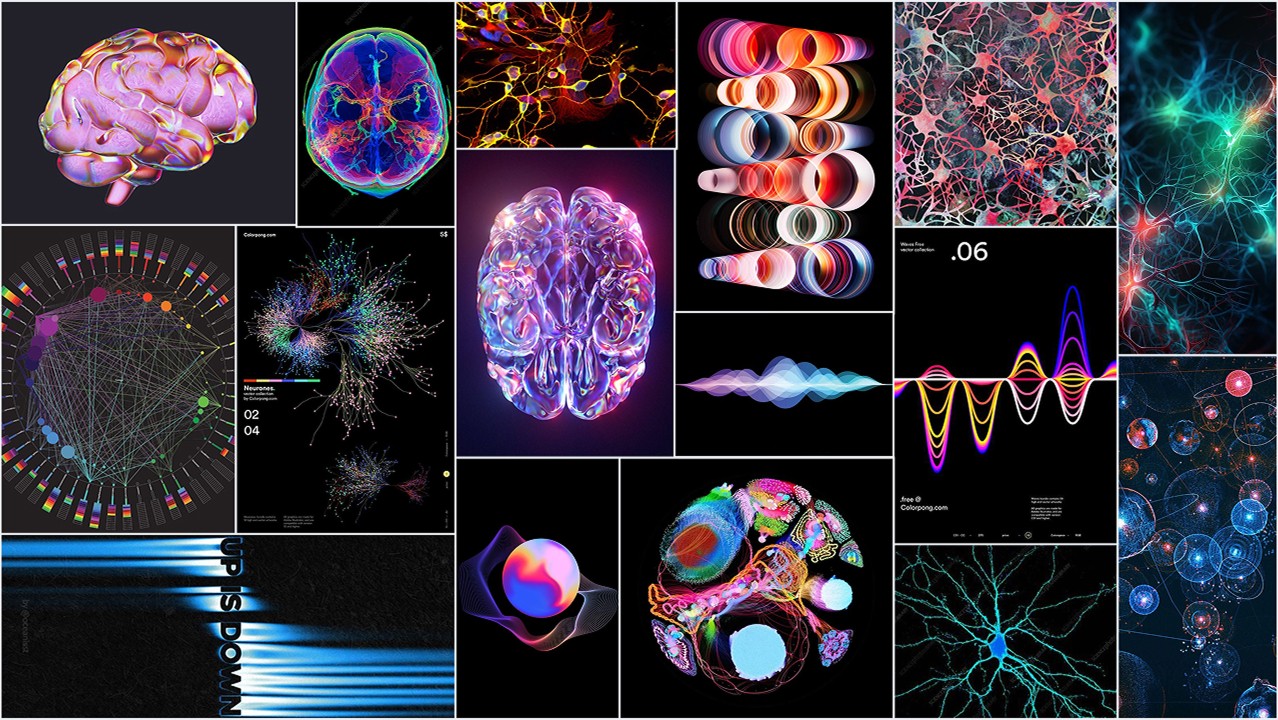
Neon Night
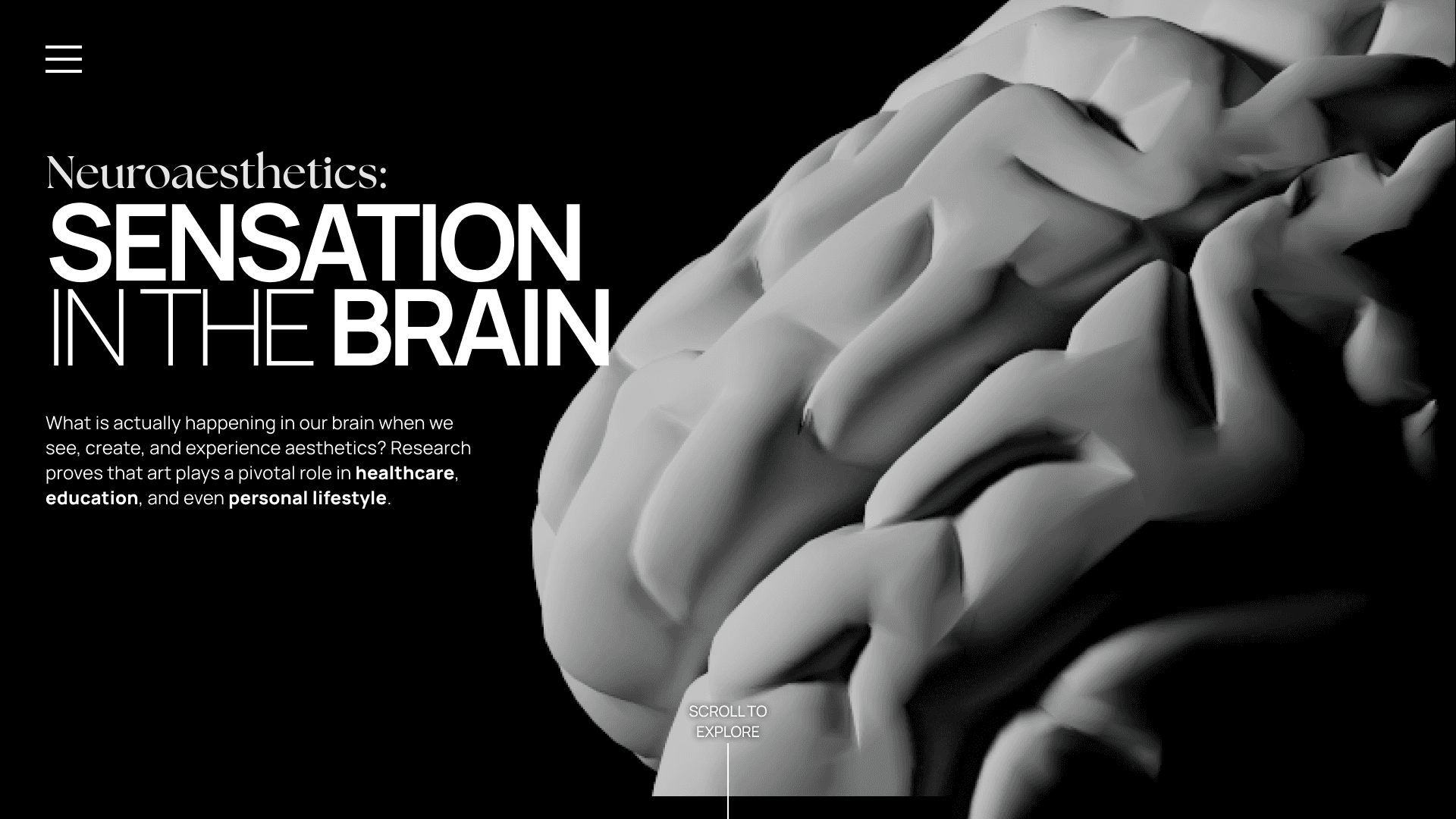
This theme embodies creative modernity and blends data with thought-provoking visuals. The design uses dynamic and interactive color to engage users. Key elements include polished and animated visuals and a focus on visual design
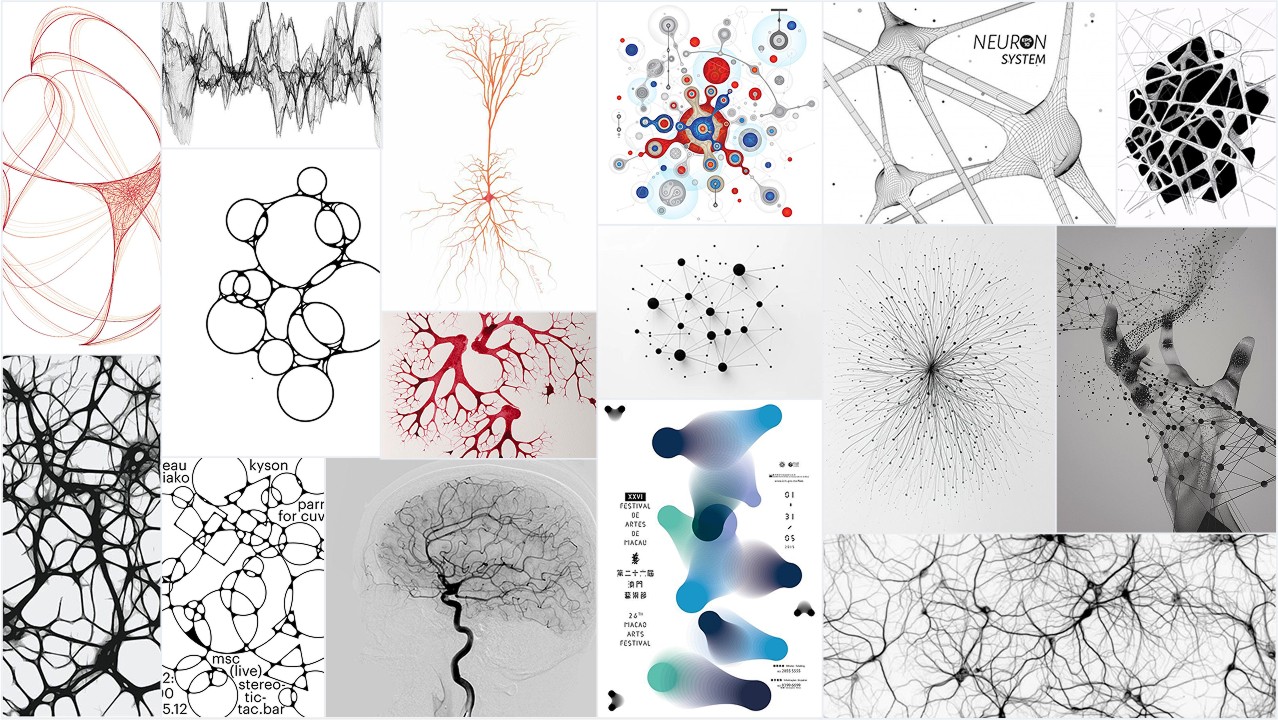
Digital Diagram
This light, minimalist design is inspired by hand-drawn diagrams, microscopic photography, and illustration. Cleanly llustrated scientific data is artistic yet professional. Key elements include typography, simplicity, and minimalism
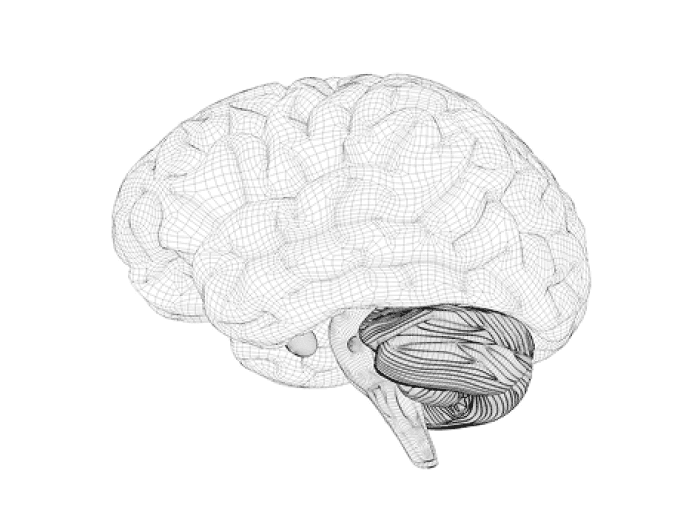
Asset Creation

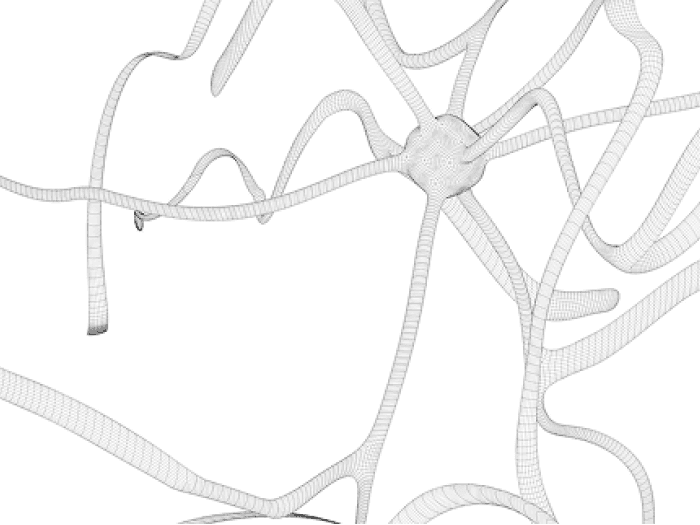
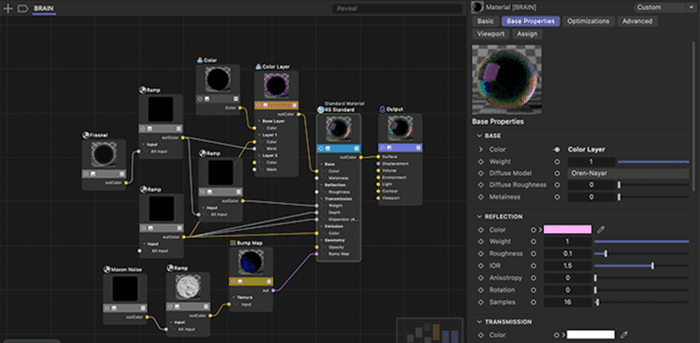
Final Designs
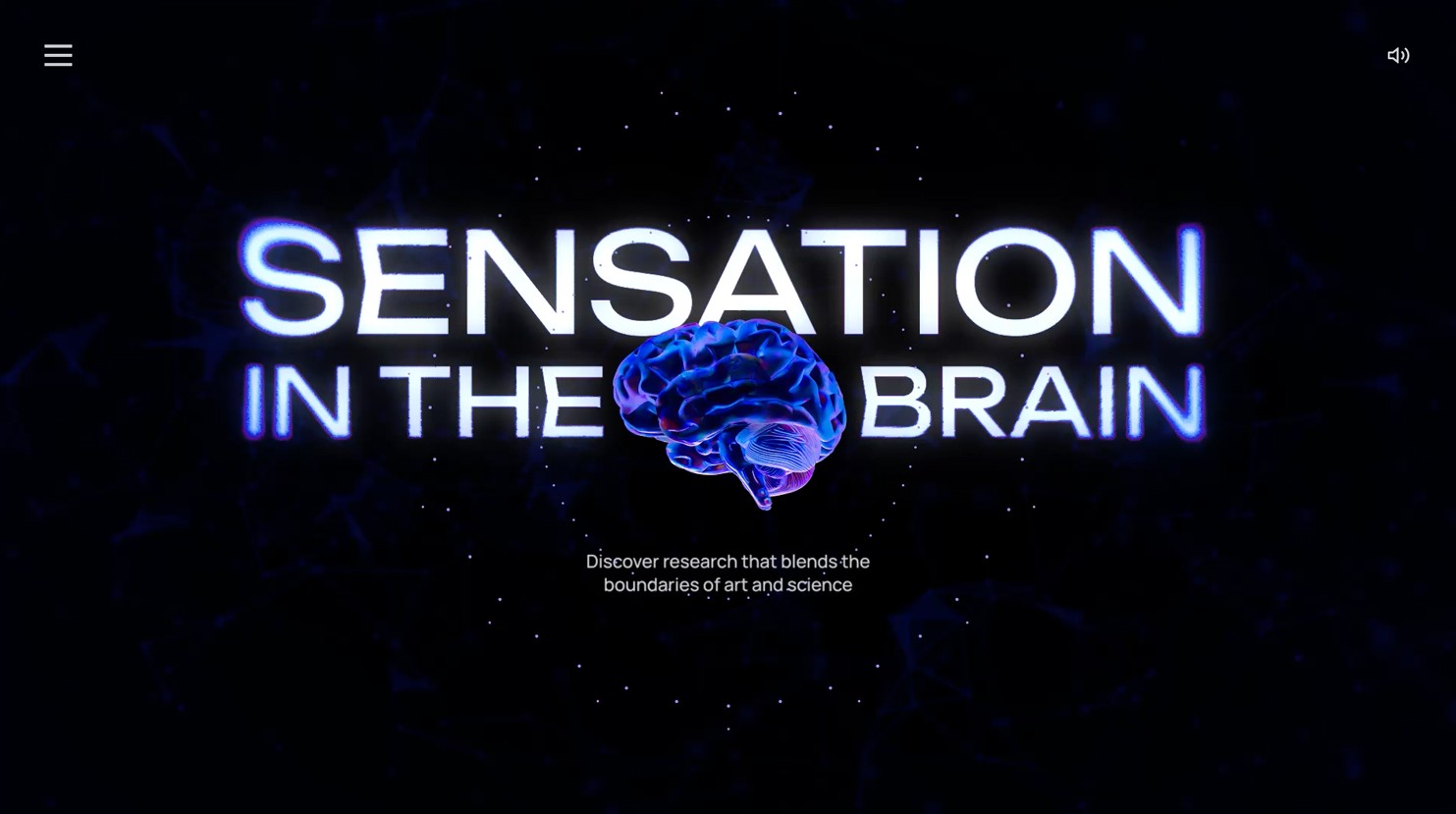
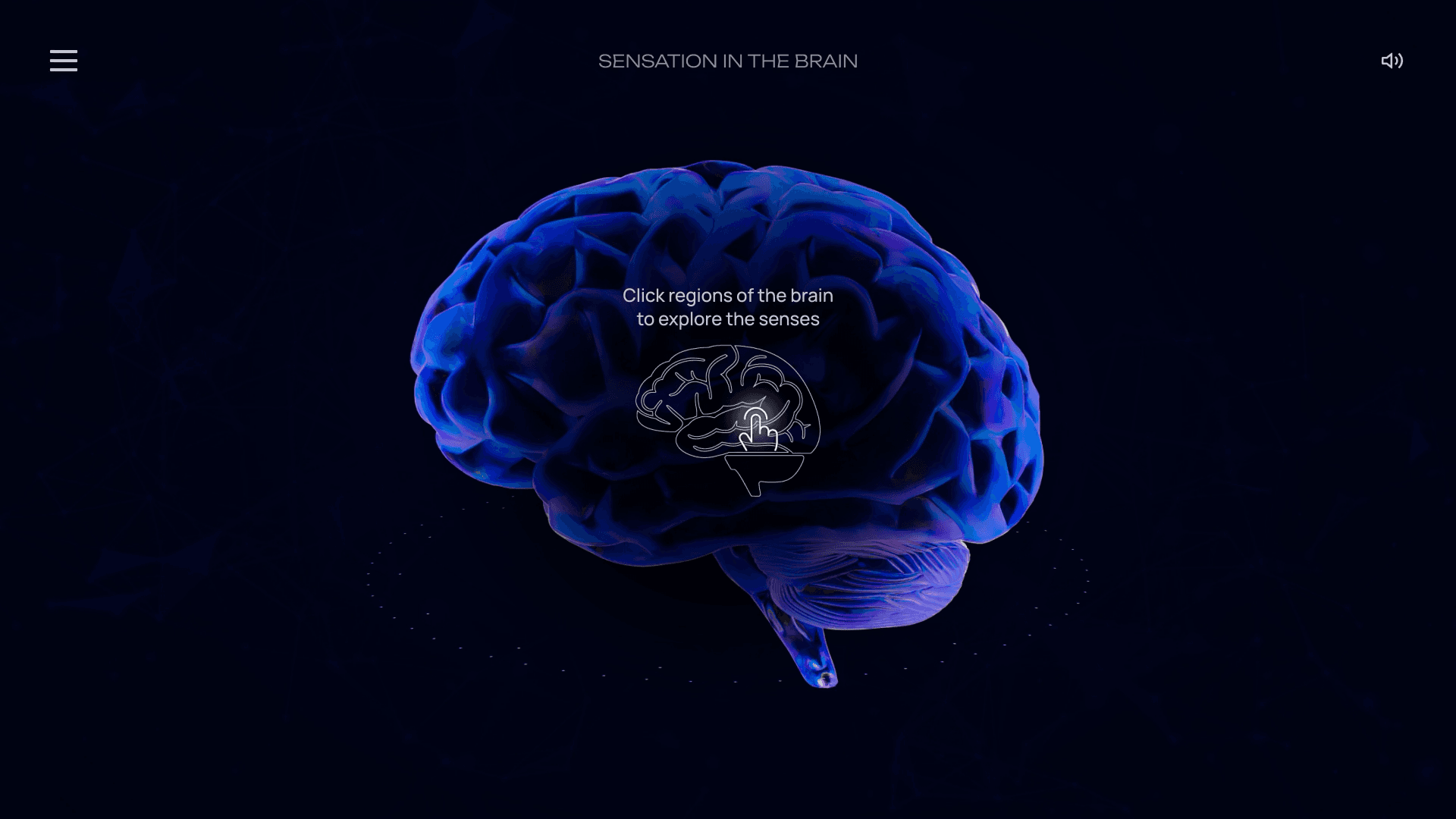
The Conclusion
Beautiful visuals makes complex data engaging, memorable, and accessible
With Sensation in the Brain, I created an interactive platform to make neuroaesthetics research more accessible, memorable, and persuasive. By highlighting this field’s potential in the realms of healthcare, education, & lifestyle, this project hopes to create a positive & educated public opinion about neuroaesthetics
This project had many challenges, and many were predominantly sourced from the unconventional navigational structure I sought to utilize. I worked hard to make the interactive 3D intuitive, understandable, and ultimately relevant to the information displayed